Some recipes stay with us long after we have forgotten exactly how they were made. Orange Chicken is one of those recipes for me. My mother used to make a wonderful chicken dish with orange, and although I don’t have her exact recipe, I remember the flavors and the comforting character of the meal.
Over time, I developed my own version inspired by what I remember, using fresh oranges, chicken thighs, onions, garlic, turmeric, ginger, and a few simple seasonings. This isn’t the battered and fried orange chicken that many people may immediately associate with the name. Instead, it is a home-style dish of chicken slowly simmered in fresh orange juice with plenty of onions and garlic. The chicken develops color first, then cooks gently until tender while the onions soften into the cooking liquid and the orange brings a subtle balance of sweetness and acidity.
It is also surprisingly easy to make. There are no complicated techniques and very little preparation. Most of the work happens in one pot, and once everything is assembled, slow cooking does the rest. I especially like serving this orange chicken with fried potatoes or fried sweet potatoes. Both are wonderful for soaking up some of the flavorful sauce. Sweet potatoes have the added advantage of complementing the citrus particularly well, while regular potatoes provide a more neutral accompaniment and allow the orange and spices in the chicken to stand out.
A Different Kind of Orange Chicken
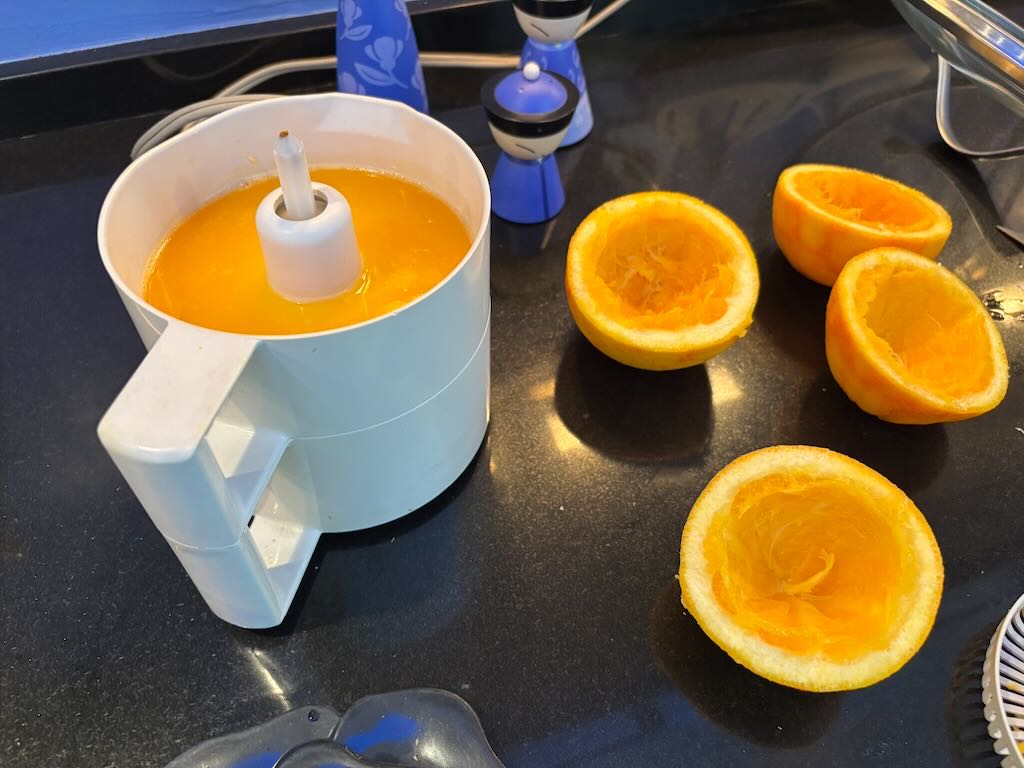
There are many ways to combine chicken and citrus, and orange works particularly well because it can contribute several dimensions of flavor at once. The juice brings sweetness and acidity, while the fragrant outer peel contributes the unmistakable aroma of orange. For my version, I use two large fresh oranges for approximately eight chicken thighs. I use both the flavorful outer rind and the freshly squeezed juice, so very little of the fruit goes to waste.
As the chicken cooks, the orange flavor changes. At first it is fresh and distinctly citrusy, but after slow cooking it becomes softer and more integrated with the savory ingredients. It doesn’t turn the chicken into a sweet dessert-like dish. Instead, it creates a savory sauce with a gentle fruitiness in the background.
That balance is one of the things I enjoy most about the recipe. A little honey is optional. When I use it, I add only enough to encourage a touch of caramelization and complement the natural sweetness of the oranges. Whether it is necessary will also depend on the fruit. Some oranges are exceptionally sweet, while others have considerably more acidity.
Why Chicken Thighs Work So Well
Chicken thighs are particularly suited to a recipe like this because they respond beautifully to slow cooking. They have more richness than chicken breasts and remain succulent during the longer simmering period.
I also like the fact that chicken thighs are forgiving. This is meant to be an uncomplicated home-cooked meal rather than a recipe requiring constant attention and precise timing. Once the chicken has developed some color and the liquid has been added, it can simmer gently while all the flavors come together.
As the thighs cook, their juices mingle with the orange, spices, onions, and garlic. What begins as a collection of very simple ingredients gradually becomes a deeply flavored sauce. And that sauce may be my favorite part of the entire dish.
The Onions Become Part of the Sauce
Onions play a much larger role here than simply providing an aromatic base. I start them gently in a little olive oil and cook them only until they become translucent. I deliberately don’t brown or overcook them at the beginning because they still have plenty of cooking ahead of them.
During the slow simmer, they continue to soften and eventually become almost incorporated into the sauce. By the time the chicken is ready, the onions have absorbed the chicken juices, orange, garlic, and spices. Don’t leave them behind in the pot when serving.
Spoon the softened onions and cooking juices over the chicken. They are packed with flavor and are particularly good when they find their way onto the potatoes served alongside the meal. This gradual transformation is also one of the reasons the recipe doesn’t require a complicated sauce. The sauce essentially creates itself as everything cooks together.
Garlic That Turns Soft and Sweet
I also use several whole or roughly cut cloves of garlic. Because the chicken eventually cooks slowly in liquid, there is no need to mince the garlic finely. Long, gentle cooking changes garlic dramatically. Its initial sharpness mellows, and the cloves become tender and considerably sweeter. By the end of cooking, you may find pieces of garlic soft enough to crush into the sauce with a fork.
Garlic and orange might not be the first combination that comes to mind, but they work extremely well together in a savory dish. The citrus provides brightness while the mellow garlic adds depth. Combined with the onions, they create an aromatic foundation that supports the orange rather than competing with it.
Turmeric, Ginger and Warm Savory Spices
The seasonings in this orange chicken are uncomplicated, but each contributes something different. Turmeric gives the chicken its beautiful warm golden color and adds a subtle earthy quality. Ginger naturally complements citrus and adds warmth without making the dish spicy. Black pepper provides a little bite, while celery salt contributes another savory layer.
I also use a bouillon cube for additional depth. Alternatively, some broth can replace part of the water added later in the cooking process. Because both bouillon and celery salt can contribute quite a bit of sodium, I don’t automatically add additional salt at the beginning. It is much easier to taste the sauce after the chicken has cooked and decide whether it actually needs more. This is one of those recipes where tasting as you go is more useful than following an exact amount of salt.
Fresh Orange Makes the Difference
Fresh oranges are really at the heart of this dish. Using both the aromatic outer peel and juice gives the sauce considerably more character than juice alone. The colorful outer layer of orange peel contains fragrant citrus oils, which release their aroma during cooking.
When removing the rind, however, it is best to concentrate on the orange-colored outer portion and avoid taking too much of the thick white pith underneath. The pith can introduce unnecessary bitterness. For approximately eight chicken thighs, I find two large oranges provide a good amount of citrus flavor. After using the outer rind, I squeeze the same oranges and add their juice to the pot.
Depending on the size and juiciness of the oranges, their juice may or may not provide enough cooking liquid. If necessary, I simply add some water or broth so the chicken has enough liquid to simmer gently. Using fresh fruit also means the flavor of the dish will vary slightly from one batch to another. I actually like that. Cooking with fresh ingredients doesn’t always produce something completely identical, and that is part of home cooking.
Browning First, Simmering Slowly
Although the chicken ultimately cooks in liquid, allowing it to develop some color beforehand makes a noticeable difference. Browning creates deeper savory flavors that become part of the finished sauce. The chicken picks up the turmeric and spices while the onions continue cooking underneath and around it.
If I want a slightly sweeter version, this is also when a little honey can be introduced. The honey works particularly well with the orange and can help create some caramelized notes on the chicken.
After that initial cooking, the character of the recipe changes completely. Fresh orange juice goes into the pot, the heat comes down, and everything cooks slowly and gently. This combination of initial browning followed by moist cooking gives you the best of both techniques: flavorful chicken on the outside and tender meat inside.
Slow Cooking Brings Everything Together
Once the orange juice and enough additional liquid are in the pot, there isn’t much left to do. This is the relaxed part of the recipe. The chicken simmers over very low heat with the pot covered, giving the ingredients time to exchange flavors. The chicken seasons the liquid, while the orange, spices, garlic, and onions season the chicken.
During this time, I check occasionally to make sure the liquid hasn’t evaporated completely. You want some of that delicious sauce remaining when the chicken is ready. The aroma that develops while it cooks is wonderful. Orange becomes less sharp, garlic mellows, and the turmeric and ginger settle into the background. Instead of tasting like individual ingredients, everything begins to taste like one cohesive dish. That is what slow cooking does particularly well.
A Wonderful Meal with Fried Potatoes or Sweet Potatoes
My favorite accompaniments for this orange chicken are fried potatoes and fried sweet potatoes. Regular potatoes provide a savory contrast to the slightly sweet citrus notes of the chicken. More importantly, they are excellent for catching the sauce. Sweet potatoes take the meal in a different direction. Their natural sweetness echoes the orange and creates a particularly harmonious combination. The browned, slightly crisp exterior of fried sweet potatoes also contrasts nicely with the tender chicken and soft onions.
Rice would certainly work as another accompaniment, as would bread for soaking up the sauce. However, fried potatoes remain one of my favorites. Whichever accompaniment you choose, make sure some of those onions and cooking juices make it onto the plate.
A Family Recipe Reimagined
One of the things I find interesting about family cooking is how recipes evolve. Sometimes we inherit carefully written recipes with precise measurements. Other times, what we inherit is a memory: an aroma, a combination of ingredients, the appearance of a dish on the table, or simply the knowledge that we loved eating it. My mother’s orange chicken falls into the second category.
I don’t know her exact recipe, and I wouldn’t claim that this is precisely how she prepared it. Instead, this is the version I developed from my memory of her dish and from cooking it in a way that makes sense to me. In some ways, I think that makes it just as much a family recipe. Food traditions don’t always survive as fixed formulas. They also survive because someone remembers a dish and decides to make it again. Over time, that new version develops its own identity.
Simple Ingredients and Plenty of Flavor
What I particularly appreciate about this orange chicken is that nothing about it is complicated. Chicken, onions, garlic, oranges and a handful of seasonings are all familiar ingredients. There is no elaborate marinade to prepare hours in advance and no separate sauce requiring another pan.
Yet the finished dish has considerably more flavor than its simplicity might suggest. The onions become rich and soft. The garlic turns mellow. The chicken becomes tender. The orange provides both fragrance and brightness, while turmeric and ginger add warmth.
And all those ingredients leave behind a savory citrus sauce that deserves to be spooned generously over everything on the plate. This is the kind of cooking I return to again and again: straightforward, adaptable and full of flavor. It doesn’t need to look elaborate to be memorable. Perhaps that is also why it reminds me so much of home cooking.

Fragrant Orange Chicken: A Comforting Family-Inspired Recipe
Description
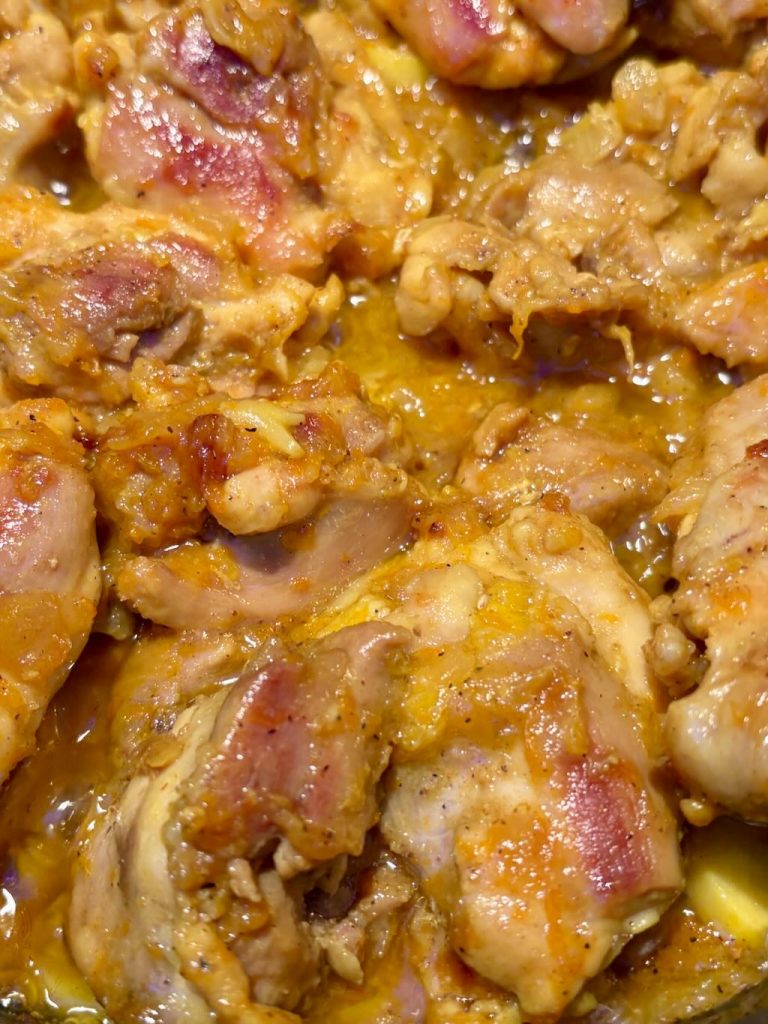
This family-inspired Orange Chicken combines tender chicken thighs with fresh orange juice and rind, slowly cooked onions, garlic, turmeric, ginger, and savory seasonings. The chicken is first cooked until lightly browned and then gently simmered in the citrus-infused sauce until tender and flavorful. Serve it with fried potatoes or sweet potatoes and spoon plenty of the soft onions and fragrant orange sauce over the chicken for a simple, comforting meal.
Ingredients
Instructions
-
The Flavor Foundation and Sautéing
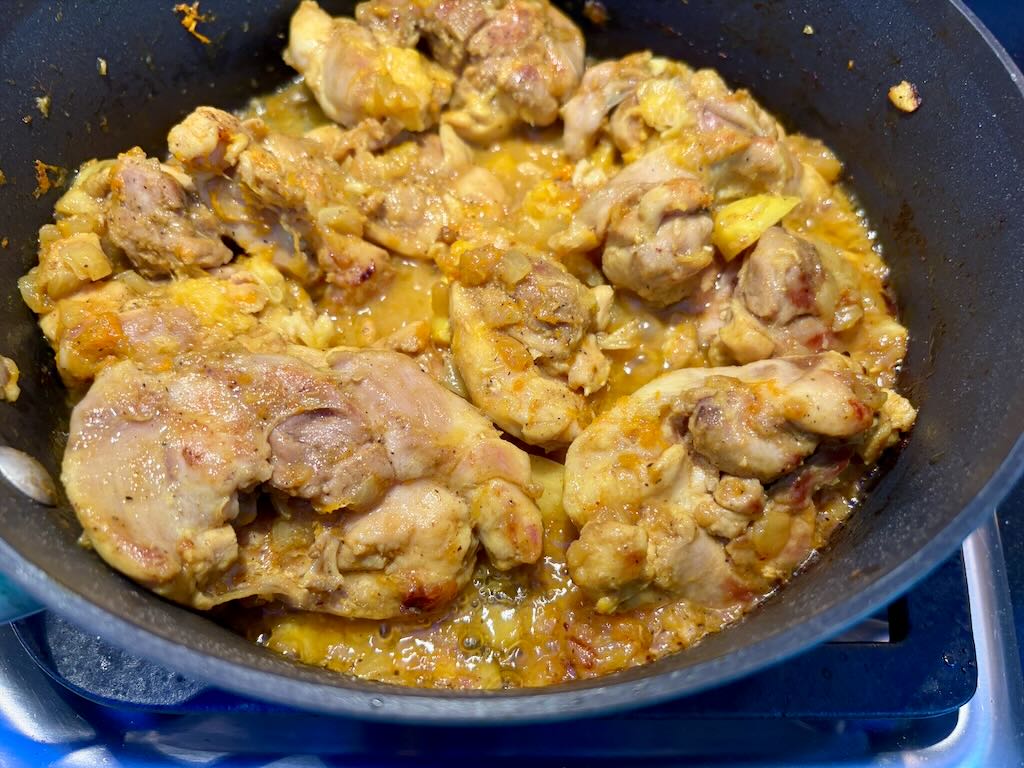
Chop the onion and add it to a pan with one tablespoon of olive oil. Cover and cook gently until the onion becomes translucent. Add the garlic, black pepper to taste, turmeric, celery salt, and ginger, then stir well to combine the spices with the onion. Add the chicken thighs, followed by a little more turmeric, another tablespoon of olive oil, and the orange rind. If you prefer a touch of sweetness, add a little honey at this stage.
-
The Slow Simmer
Turn the chicken every few minutes, allowing it to develop a nice golden color on all sides. Once browned, add the fresh orange juice and enough water, or broth if you prefer, to nearly cover the chicken. Cover the pan, reduce the heat to low, and simmer gently for about 45 minutes, checking occasionally to make sure there is enough liquid remaining.