Pasta is probably one of my favorite foods, partly because there seems to be no end to what you can do with it. A few simple ingredients can create an entirely different meal depending on the shape of pasta, the sauce, the herbs, and even whether you decide to serve it warm or cold. This Rigatoni with Fire-Roasted Tomatoes, Anchovies, and Kalamata Olives is one of those wonderfully adaptable pasta dishes that I think works just as well on a cool evening as it does chilled on a warm summer day.
A savory Mediterranean-inspired pasta delicious served warm or cold
I came up with this combination when I wanted to try something a little different from the pasta dishes I normally make. The result brings together several bold ingredients—fire-roasted tomatoes, Kalamata olives, garlic, anchovies, Parmesan, mozzarella, and fresh basil—but none of them needs to dominate the finished dish. Instead, they build layers of savory, slightly smoky, salty, fresh, and rich flavors around the pasta.
The anchovies may be the most surprising ingredient, particularly for someone who doesn’t normally gravitate toward seafood. I am sensitive to seafood myself, so anchovies are not an ingredient I would necessarily think of adding simply for their fish flavor. Here, however, they serve a completely different purpose. Once they are warmed in olive oil and crushed, they begin to break down and almost disappear into the sauce.
What remains is their deep savory character rather than an obviously fishy taste. Combined with garlic and olive oil, they create an intensely flavorful foundation for the fire-roasted tomatoes. Kalamata olives add another savory dimension and a pleasantly substantial texture, while a modest amount of Parmesan and mozzarella softens the acidity of the tomatoes and gives the sauce just enough body to cling beautifully to the rigatoni. Fresh basil added at the end provides exactly the contrast the dish needs—a fragrant burst of freshness against all those deeper cooked flavors.
Why Rigatoni Is Perfect for a Chunky Tomato Sauce
There are hundreds of pasta shapes, and choosing one isn’t always simply a matter of appearance. Shape and texture affect how pasta interacts with its sauce. Rigatoni is one of my favorites. These substantial tubes have enough presence to stand up to a robust sauce without becoming lost underneath it. Their hollow centers catch little pieces of tomato, olive, and cheese, while the exterior gives the sauce plenty of surface to cling to.
That becomes particularly useful with a sauce like this one. It isn’t meant to be completely smooth. You still have pieces of fire-roasted tomato, roughly cut Kalamata olives, bits of fresh basil, and melted cheese distributed throughout the pasta. Rigatoni can carry all of that beautifully.
It also has a satisfying bite when cooked al dente. Because rigatoni is considerably thicker than delicate pasta shapes such as angel hair or spaghetti, it generally needs a little more cooking time. I prefer to follow the timing suggested on the package but begin checking the pasta before the full cooking time has elapsed. Pasta should be tender without losing its characteristic bite. That texture becomes even more important if you plan to enjoy leftovers cold. Pasta that begins slightly too soft can become heavy after sitting in the sauce, while properly cooked rigatoni retains more of its structure.
Anchovies: The Ingredient You May Not Know Is There
Anchovies have a reputation that can make people either love them or avoid them entirely. On pizza or served whole, their distinctive flavor is unmistakable. Used as a cooking ingredient, however, anchovies can behave very differently.
When anchovy fillets are added to warm olive oil and gently crushed, they gradually break apart. With a fork, you can work them into the oil until they become almost paste-like. Instead of encountering pieces of anchovy in the finished pasta, their flavor becomes distributed throughout the sauce.
This is why anchovies appear in many traditional Mediterranean preparations even when the finished food doesn’t immediately announce itself as an anchovy dish. They contribute umami, the deep savory quality that makes food taste richer and more satisfying. In this pasta, the anchovies work particularly well because several other ingredients are equally assertive. Garlic, tomatoes, olives, Parmesan, and basil all have recognizable personalities of their own. The anchovies settle into the background and connect those flavors rather than overwhelming them.
A small can is enough for an entire batch of pasta. There is another practical advantage: anchovies bring their own saltiness. Combined with Kalamata olives and Parmesan, they mean the sauce already contains several naturally salty ingredients. For that reason, I would taste before adding any additional salt to the sauce. The pasta water can be salted normally, but the sauce may need little or nothing more.
Fire-Roasted Tomatoes Add Another Layer
Ordinary canned tomatoes would certainly make a good pasta sauce, but fire-roasted tomatoes give this recipe another dimension. The tomatoes are exposed to high heat before canning, creating lightly charred areas and a deeper flavor than completely uncooked canned tomatoes. That subtle roasted quality works particularly well with the richness of the anchovies and Kalamata olives.
It also makes this an exceptionally convenient recipe. You don’t have to roast fresh tomatoes yourself or simmer a tomato sauce for hours to develop flavor. Much of that character is already waiting in the can. This is exactly the kind of ingredient I appreciate for an easy meal. Convenience doesn’t necessarily mean sacrificing character. Starting with an ingredient that already has complexity allows you to make something interesting without turning dinner into an all-afternoon project.
Kalamata Olives for Flavor and Texture
Kalamata olives bring their distinctive fruity, salty, slightly tangy flavor to the pasta, but I also like what they contribute texturally.
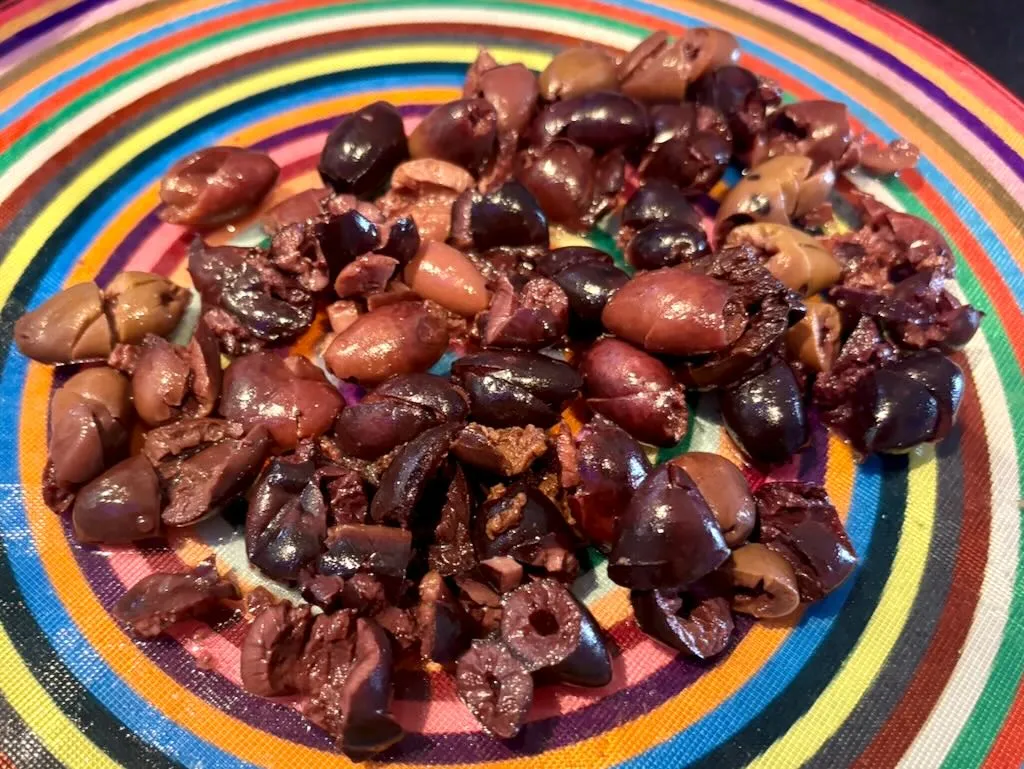
I don’t chop them into tiny pieces. Halving them and crushing them slightly leaves enough of the olive intact that you actually notice it when eating the pasta. Some bites contain more tomato, others pick up a piece of olive, and others have fresh basil and melted cheese.
That variation makes a relatively simple dish much more interesting. Kalamata olives are strongly flavored, so they are particularly well suited to robust ingredients such as tomatoes and garlic. Their dark color also looks beautiful against the red tomatoes, pale cheese, green basil, and golden olive oil. This is a rustic pasta, and I think roughly cut olives suit it much better than perfectly minced ones.
Garlic, Olive Oil and the Beginning of the Sauce
Many wonderful pasta sauces begin with surprisingly little. Olive oil and garlic provide the aromatic starting point here. As the garlic warms in the oil, it releases its flavor before the anchovies are incorporated. Once the anchovies begin to dissolve, the oil itself becomes seasoned.
This means the sauce has already developed considerable character before the tomatoes ever enter the pan. Garlic is also an ingredient I prefer to adjust according to taste rather than treat as an absolute measurement. I might use three or four cloves depending on their size. Someone who loves garlic could certainly use a little more, while a milder version could use less.
That flexibility is part of what makes simple home cooking enjoyable. Recipes provide a framework, but ingredients such as garlic, herbs, and cheese leave room for personal preference.
A Little Cheese Changes the Sauce
This isn’t intended to be an especially cheesy pasta, but I like adding a small amount of Parmesan and mozzarella toward the end of cooking. The Parmesan contributes its characteristic nutty, salty flavor, while mozzarella brings mildness and a little creaminess. As the cheeses begin to melt into the tomatoes, they also slightly thicken the sauce.
The result falls somewhere between a straightforward tomato sauce and a creamy cheese sauce without becoming either one. I think that balance is particularly important here. Too much cheese could cover the character of the olives, anchovies, and fire-roasted tomatoes. A modest amount rounds everything out while still allowing those ingredients to remain recognizable. It also helps the sauce adhere to the ridges and openings of the rigatoni rather than simply collecting at the bottom of the serving bowl.
Fresh Basil Belongs at the End
After all those cooked, savory flavors, fresh basil brings the dish back to life. I add it after the pasta and sauce have been combined rather than cooking it for a long time with the tomatoes. Basil is delicate, and prolonged cooking changes both its color and its fresh aroma.
Adding freshly chopped basil just before serving preserves more of its fragrance and provides a bright herbal note with every bite. It also makes this pasta particularly appealing when served cold. Once chilled, the deeper flavors of the tomato, olives, garlic, and anchovies become a little more subdued, while the basil provides a fresh contrast.
If you grow basil at home, this is a wonderful recipe for making use of it.
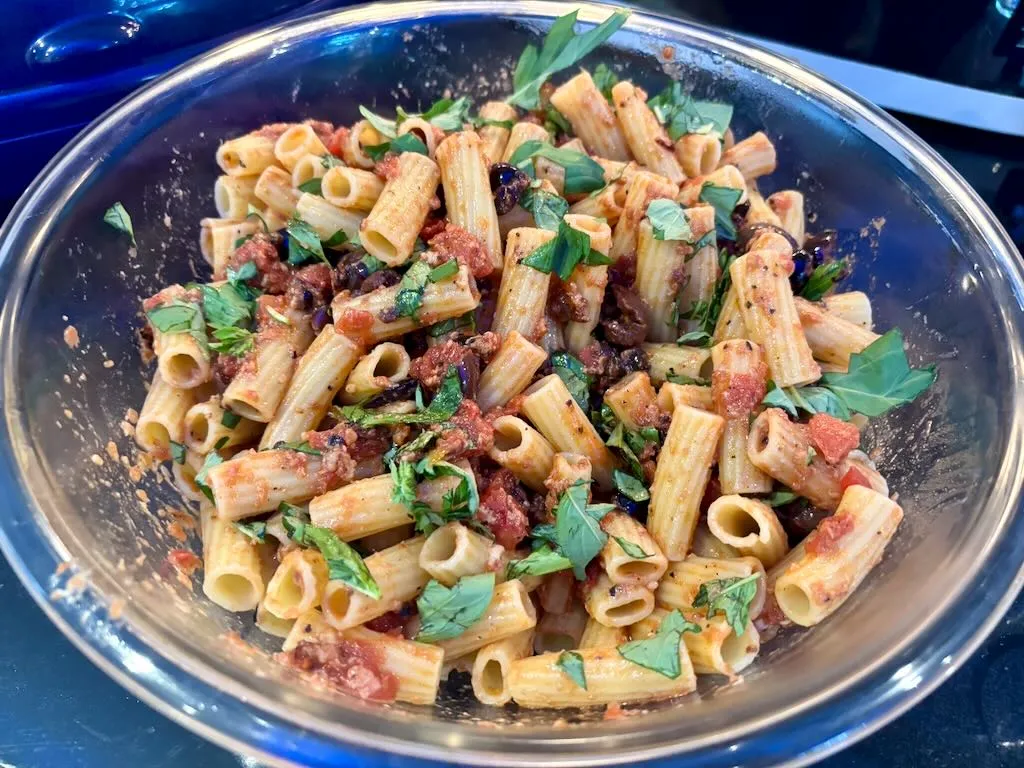
One Pasta, Two Different Meals
One of my favorite things about this recipe is that I can enjoy it warm or cold. Served warm, it feels hearty and comforting. The cheese is soft, the sauce is fragrant, and the rigatoni carries all that warm tomato and garlic flavor. It makes a satisfying main course without needing much else.
Once chilled, however, it takes on a different personality. The rigatoni remains substantial, but the tomatoes, olives, and basil make the dish feel refreshing rather than heavy. That makes it particularly good for warmer weather when you may want pasta but don’t necessarily want a steaming plate of food.
It also makes leftovers something to look forward to rather than simply something that needs to be reheated. You can take it directly from the refrigerator and enjoy it cold, or allow it to sit briefly at room temperature so the olive oil and flavors loosen up a little.
A Main Course or an Easy Side Dish
This pasta can easily stand on its own as a meal. Rigatoni is substantial, and the combination of tomatoes, cheese, olives, and anchovies provides plenty of flavor and richness.
But it works equally well as a side dish. Served cold, it can become part of a summer table alongside grilled vegetables, a green salad, or other simple dishes. Served warm, it can accompany a larger meal without requiring an elaborate second sauce or preparation.
That flexibility also makes it useful when cooking for other people. You aren’t tied to serving it immediately from the stove at precisely the right moment. It remains enjoyable as it cools and can intentionally be prepared ahead for a cold meal.
The Pleasure of Experimenting with Pasta
Perhaps the greatest appeal of pasta is that there is always another combination to discover. You can change the pasta shape, alter the tomato, introduce a different cheese, add herbs, or build an entire sauce around a pantry ingredient you haven’t used in that way before. Even ingredients that initially seem unlikely can suddenly make sense when combined.
That was part of the pleasure of this recipe for me. Anchovies weren’t an obvious choice, particularly given my sensitivity to seafood, but they proved how dramatically an ingredient can change when used as part of a sauce rather than eaten on its own. They don’t make this taste like a bowl of seafood pasta. Instead, they add a savory depth that might leave someone wondering why the sauce tastes so good.
Add the smoky quality of fire-roasted tomatoes, the bold character of Kalamata olives, mellow melted cheese, plenty of garlic, and fragrant fresh basil, and a handful of simple ingredients becomes a remarkably satisfying meal.
It is easy enough for an ordinary weekday but interesting enough that it doesn’t feel ordinary. And perhaps best of all, you don’t have to decide whether it is a winter pasta or a summer pasta. Enjoy it warm when you want something comforting, chill what remains, and discover how good the same dish can be the next day.
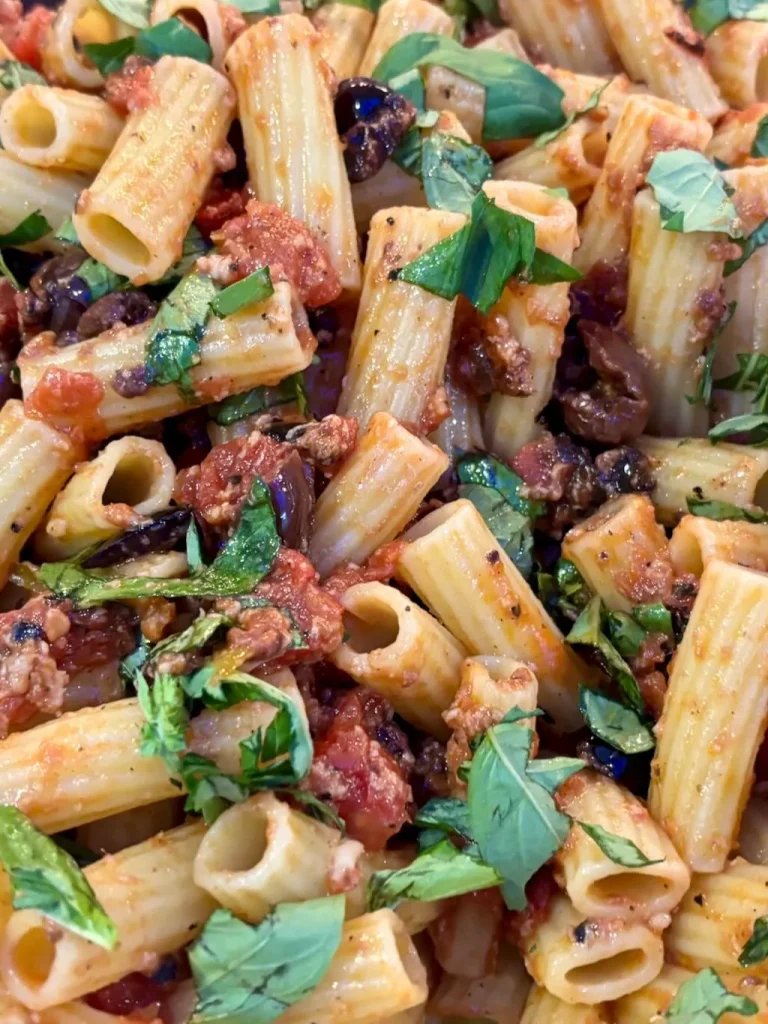

Irresistibly Delicious Rigatoni with Fire-Roasted Tomatoes, Anchovies & Kalamata Olives
Description
This easy rigatoni combines fire-roasted tomatoes, garlic, anchovies, Kalamata olives, Parmesan, mozzarella, and fresh basil for a deeply savory pasta with a hint of smoky flavor. The anchovies melt into the olive oil, adding richness without an overpowering fishy taste, while the olives and fresh basil keep the dish lively and flavorful. Serve it warm as a comforting main meal or enjoy it cold for a refreshing pasta that's equally delicious in warmer weather.
Ingredients
Instructions
Prepare the pasta
-
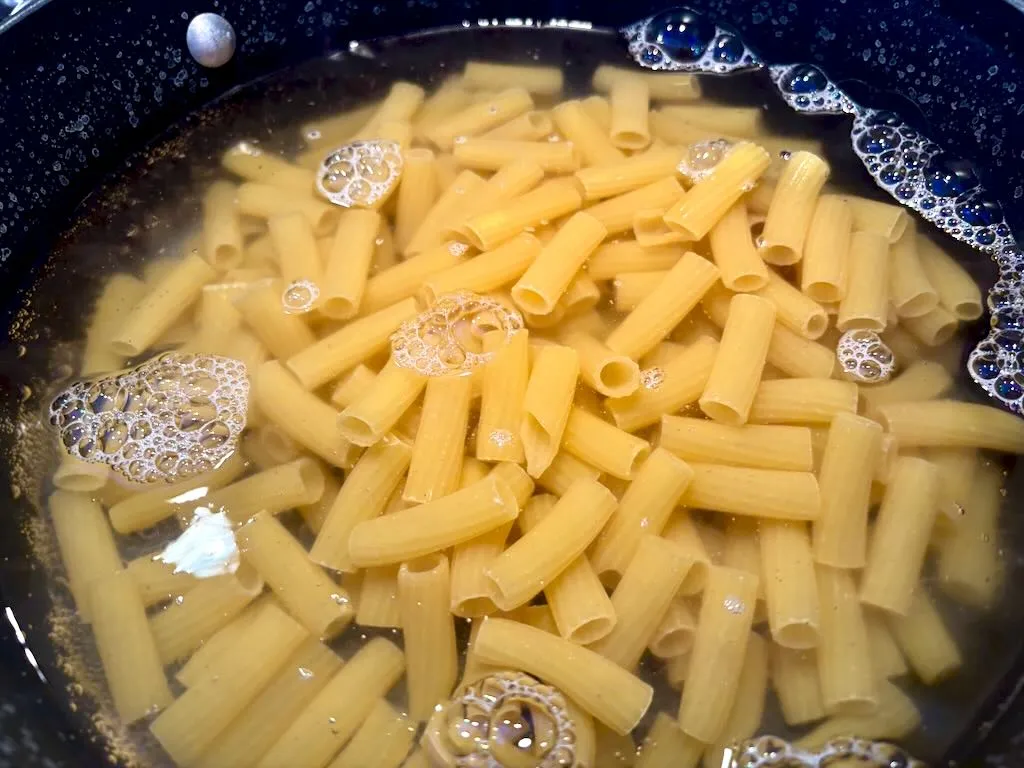
Bring a pot of salted water to a boil, then add the rigatoni and cook until al dente. Dried rigatoni usually takes about 10–12 minutes, although cooking times vary depending on the pasta, so follow the package instructions and check the texture as it cooks. Before draining, reserve a little pasta water in case you need to loosen the sauce later. I usually don’t need to add any, since I cook the sauce only until it reaches the right consistency.
Prepare the sauce
-
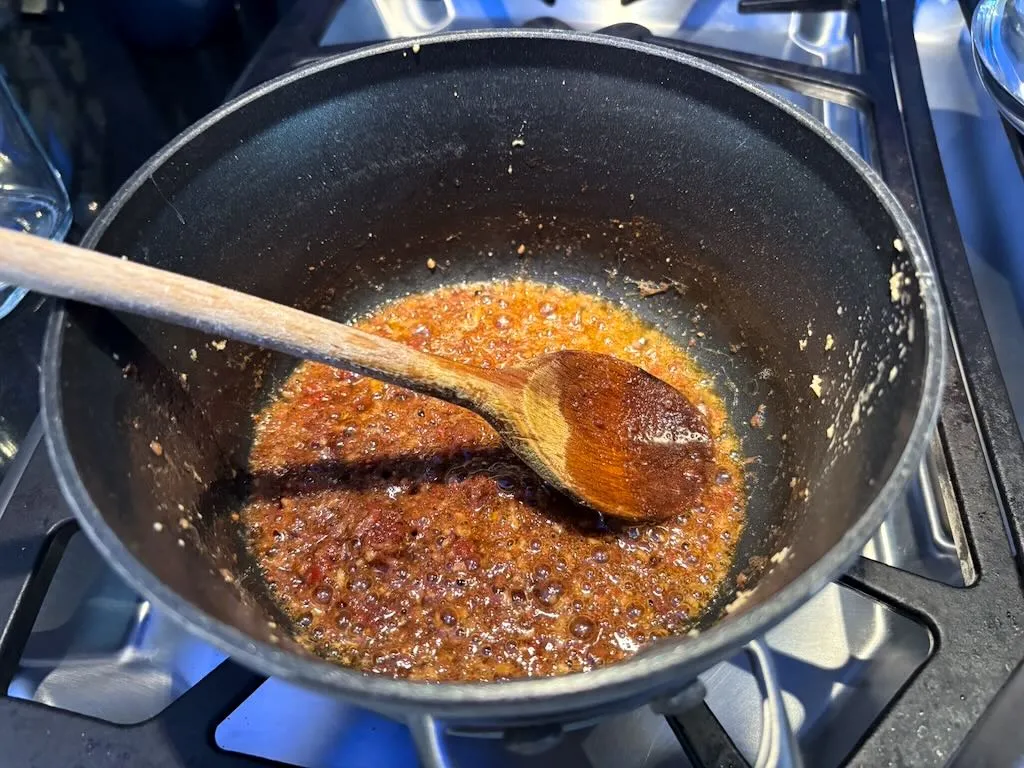
In a small pot, add two tablespoons of olive oil and warm it over medium heat. Add the minced or crushed garlic cloves and a pinch of black pepper to taste. Add the chopped anchovies, or simply place the whole fillets in the oil and crush them with a fork as they cook. Stir continuously for about a minute, until the anchovies break down and blend with the olive oil and garlic to form a savory paste.
-
Chop the olives
Coarsely chop the Kalamata olives, leaving them in fairly large pieces so they retain their texture and distinctive flavor in the finished pasta.
Add to the sauce foundation
-
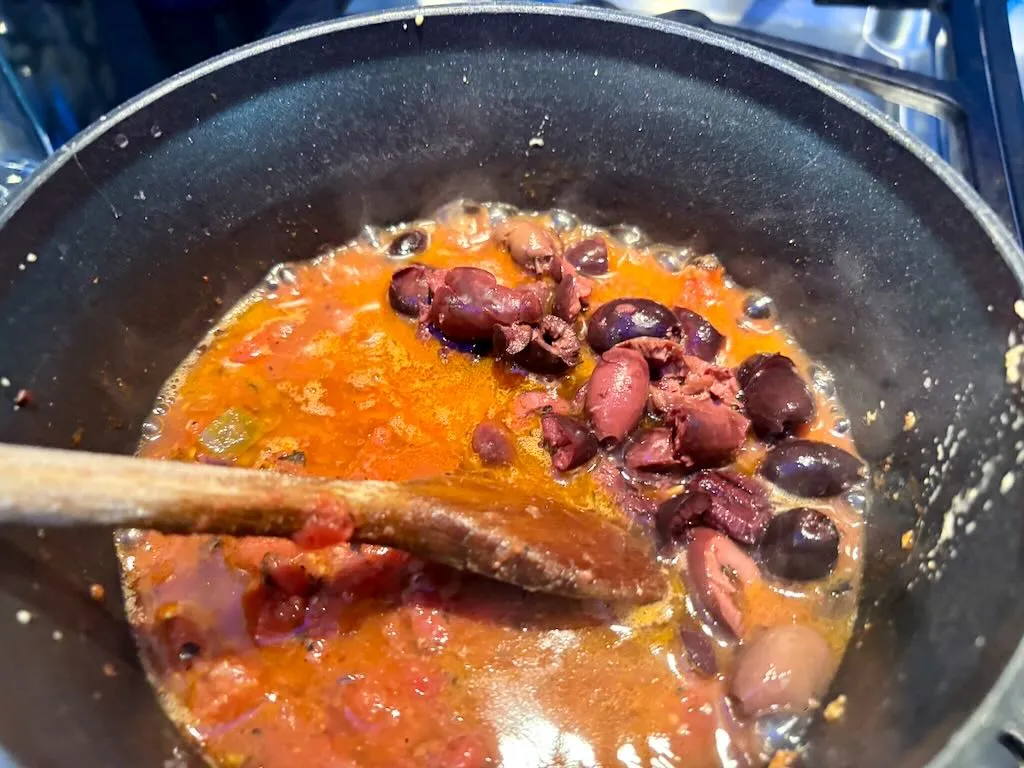
Add the chopped fire-roasted tomatoes and olives to the anchovy and garlic mixture. Stir well and cook for another minute or two, allowing the tomatoes to warm through and begin blending with the flavorful olive oil.
-
Finish the sauce
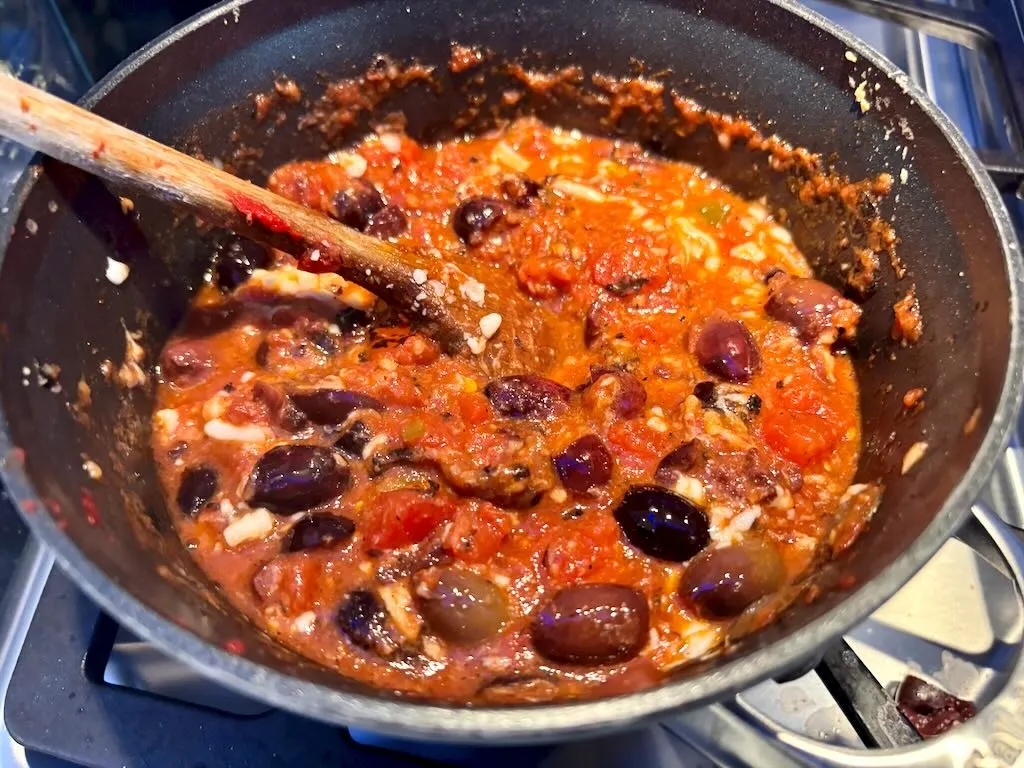
After the sauce has cooked for a couple of minutes, add the Parmesan and mozzarella. Stir gently until the cheese begins to melt and blends into the tomatoes, slightly thickening the sauce. Once the cheese has softened and the sauce reaches the desired consistency, turn off the heat.
-
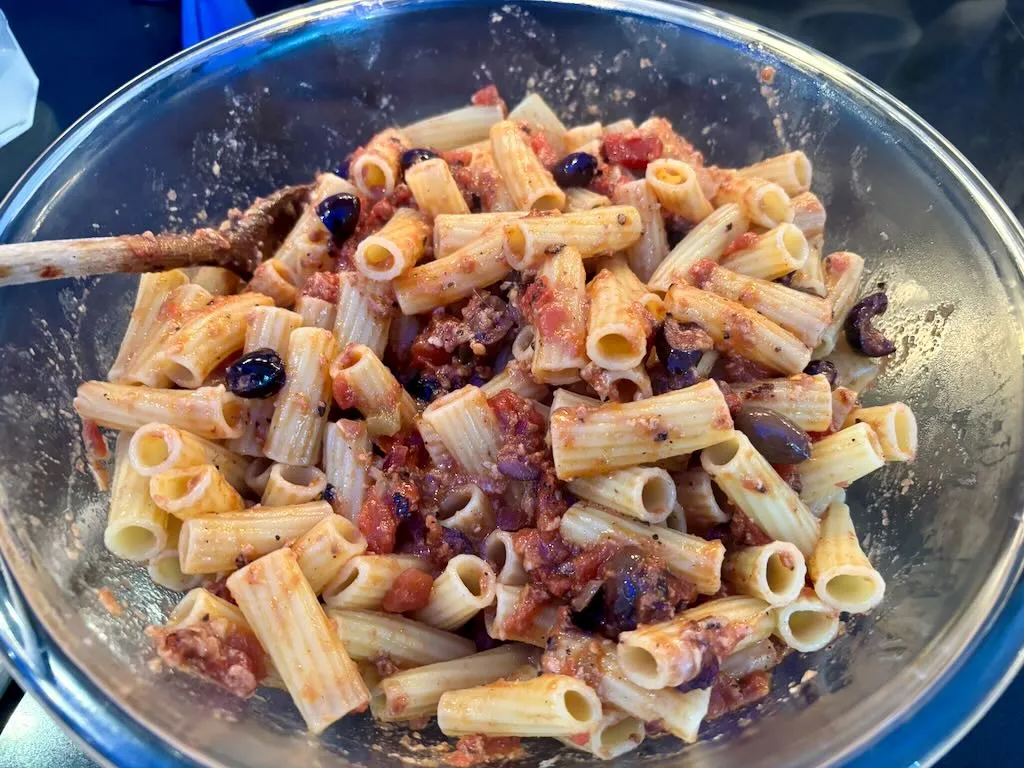
Bring everything together by adding the sauce to the drained rigatoni in a large bowl. Toss and stir well until the sauce is evenly distributed and coats the pasta, making sure the tomatoes, olives, and cheese are mixed throughout.
-
Just before serving, add the fresh basil. Although basil leaves are often torn by hand, I like to stack or fold the leaves together and use kitchen scissors to snip them into thin strips. Sprinkle the freshly cut basil over the pasta and gently toss it through before serving.