A comforting one-pot chicken with warm spices, prunes, and a touch of sweetness
Some of my favorite recipes begin by combining familiar ingredients in a slightly unexpected way. Honey Mustard Chicken with Sweet Potatoes does exactly that. Honey and mustard are already a classic pairing, but adding sweet potatoes, prunes, turmeric, ginger, garlic, and slowly cooked onions takes the combination in a different direction. The result is a warm, savory chicken dish with layers of gentle sweetness and tanginess rather than a conventional honey mustard sauce.
It is also the kind of meal I enjoy making because it doesn’t require complicated preparation or an assortment of specialized ingredients. Everything comes together in one pot, and much of the cooking happens slowly with very little attention. Once the chicken has developed some color and the cooking liquid has been added, it gently simmers before large pieces of sweet potato are placed on top to cook during the final part of the process.
The finished dish is substantial enough to serve on its own, but it is equally good with simple white rice to catch the flavorful cooking juices. There is even another way I like to enjoy it: mash some of the tender chicken and sweet potato together and wrap it in soft lavash bread, pita, or a tortilla. It becomes an entirely different meal from the same pot.
The Classic Combination of Honey and Mustard
Honey and mustard have been paired together for good reason. Each ingredient supplies something the other lacks.
Honey has sweetness but very little acidity, while mustard brings sharpness and tang. Combine them, and the two extremes soften one another. Honey rounds out the mustard while mustard prevents the sweetness from becoming overwhelming.
In this recipe, however, I don’t want honey and mustard to become a thick sauce that covers everything else. They are part of a larger combination of flavors. The honey also plays an important role during the initial cooking of the chicken. As the chicken sautés, the honey encourages browning and caramelization, helping the exterior develop attractive color and a deeper flavor.
Mustard contributes its characteristic tang in the background. Then, as the chicken slowly cooks, both flavors mingle with the onions, garlic, spices, and cooking liquid. By the time the dish reaches the table, you aren’t simply tasting honey followed by mustard. They have become part of the overall character of the dish.
Prunes Add a Different Kind of Sweetness
Prunes might seem like an unexpected addition to honey mustard chicken, but I think they are particularly well suited to this recipe. Their sweetness is deeper and fruitier than the straightforward sweetness of honey. As they simmer with the chicken, they soften and release some of their flavor into the cooking liquid.
Fruit and meat have a long history together in many cuisines. Dried fruits are particularly useful in slowly cooked dishes because they can withstand the cooking process while absorbing some of the surrounding savory flavors. Here, the prunes bridge the gap between the honey and the savory chicken. They also work naturally with the sweet potatoes added later.
The important thing is balance. This isn’t intended to become a sweet chicken dish. The mustard, garlic, onions, bouillon or broth, black pepper, ginger, celery salt, and turmeric provide plenty of savory character to balance the sweeter ingredients. That contrast is what makes the combination interesting.
Building Flavor with Onions and Garlic
As with so many comforting one-pot dishes, this one begins with onions and garlic. Cooking the onions first gives them time to soften and mellow before the chicken enters the pot. Garlic joins them along with the spices, creating an aromatic foundation that eventually becomes part of the cooking liquid.
During the longer simmer, the onions continue to soften. Rather than remaining a separate ingredient, they begin to merge with the juices and seasonings around the chicken. I particularly like this effect in slow-cooked dishes. You don’t need to prepare a separate sauce because the sauce develops naturally in the pot.
Garlic changes as well. Its initial sharpness becomes much milder after simmering, leaving behind a softer and slightly sweeter garlic flavor. By the time the dish is finished, those simple onions and garlic have helped create a surprisingly flavorful base.
Warm Spices Without Making the Dish Spicy
Turmeric and ginger bring warmth to this recipe, but not necessarily heat. Turmeric gives the chicken and cooking liquid a beautiful golden color along with its subtle earthy flavor. Ginger works particularly well with both honey and fruit, adding another aromatic dimension without overwhelming the dish.
Black pepper provides a little sharper contrast, while celery salt contributes additional savory seasoning. I also use a bouillon cube, although chicken or vegetable broth is an easy alternative. If using broth, it can simply replace some or all of the water used for simmering.
Because bouillon and celery salt can both contain considerable salt, I don’t think this is a dish where you should automatically reach for additional salt. It is better to let the ingredients cook together first and taste before deciding whether it needs any more.
Chicken Thighs or Chicken Breast?
One advantage of this recipe is that you can make it with either chicken thighs or chicken breast, depending on what you prefer or already have available. Chicken thighs are naturally well suited to simmering. Their richer meat remains moist and tender during longer cooking and contributes additional flavor to the liquid.
Chicken breast gives you a leaner, lighter version. Because white meat can become dry when overcooked, however, I would pay a little more attention to cooking time when using breast meat, particularly if the pieces are small. Either way, developing some color before adding the cooking liquid is worthwhile.
That initial sautéing adds flavor that simply dropping raw chicken into broth cannot produce. The honey helps with this process, and the turmeric gives the chicken an especially appealing golden appearance. Then the cooking technique changes from sautéing to a gentle simmer, allowing the chicken to become tender while absorbing the flavors around it.
Sweet Potatoes Complete the Meal
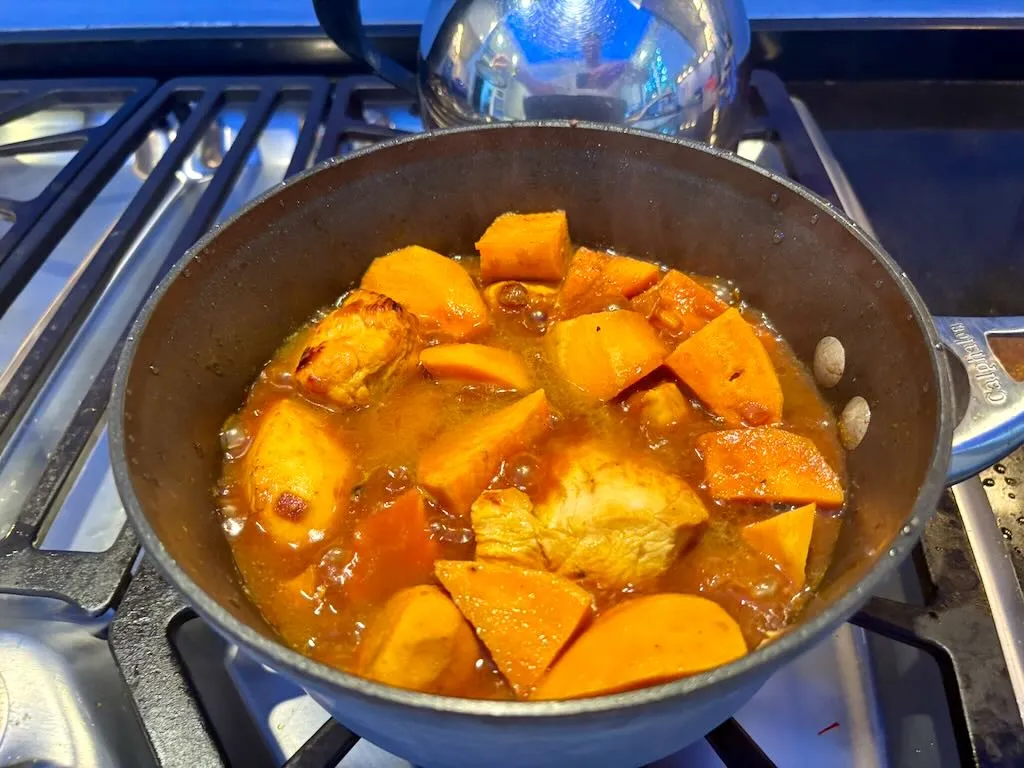
Sweet potatoes are more than a side dish here—they become part of the meal while cooking in the same pot. I peel them and cut them into fairly large pieces rather than small cubes. They are added toward the end of cooking and placed over the chicken, where they cook gently in the steam and heat of the covered pot.
Adding them later is important. If sweet potatoes were simmered for the entire cooking time, they could become overly soft and begin falling apart into the sauce. Instead, the chicken gets a head start. Once it has simmered for about half an hour, the sweet potatoes can be added for approximately the final 20 minutes.
This gives them enough time to become tender while retaining their shape. Their natural sweetness also fits beautifully with the honey and prunes, but sweet potatoes have an earthy quality that keeps them from tasting like dessert. Against the mustard, garlic, turmeric, and savory chicken, they become part of a balanced sweet-and-savory combination.
Why Gentle Simmering Works
After the initial sauté, this dish benefits from patience rather than high heat. A gentle simmer gives the chicken time to cook without becoming tough and allows the flavors in the pot to gradually mingle. The onions soften, the prunes become tender, and the honey and mustard disperse throughout the cooking liquid.
This is essentially a simple form of braising: the chicken first develops color and then finishes cooking slowly in liquid. There is something particularly satisfying about this style of cooking because the transformation happens almost by itself. You begin with individual ingredients that taste very different from one another. After slow cooking, they become difficult to separate. The sauce tastes of chicken, onion, garlic, fruit, honey, mustard, and spices all at once.
A One-Pot Meal with Several Ways to Serve It
Once the sweet potatoes are tender and the chicken is cooked through, you essentially have a complete meal in the pot. You can simply place a piece of chicken on the plate with sweet potatoes and prunes and spoon some of the cooking juices and softened onions over everything.
That is probably the simplest way to enjoy it. White rice is another natural accompaniment. Its mild flavor provides a neutral background for the more complex sweet-and-savory sauce, and rice is particularly good at absorbing those cooking juices.
But there is another serving method I enjoy that transforms the leftovers—or even the freshly cooked dish—into something completely different. Because both the chicken and sweet potatoes become very tender, they can be mashed or shredded together with some of the sauce. Spoon the mixture onto lavash, pita bread, or a soft tortilla, fold or roll it, and you have an easy handheld meal. A single recipe can therefore become dinner one evening and an entirely different lunch the next day.
A Recipe Built on Contrasts
What makes this dish interesting isn’t any single ingredient. It is the contrast among them. Honey is sweet; mustard is tangy. Prunes are fruity; garlic and onions are savory. Sweet potatoes have their own earthy sweetness, while turmeric and ginger bring warmth. The chicken provides the substantial centerpiece that allows all those flavors to work together.
None needs to dominate. That is often the secret to combining sweet ingredients with meat. The goal isn’t to make the meat taste sweet. It is to use sweetness as one component of a savory dish.
The mustard is particularly useful for maintaining that balance because its acidity cuts through the richer and sweeter elements. Black pepper, garlic, bouillon, and celery salt pull everything back toward the savory side. The result is comforting without being bland and unusual without requiring unusual cooking skills.
Easy Enough for an Everyday Meal
Despite the number of flavors involved, there isn’t anything complicated about making this chicken. You don’t need a separate marinade. You don’t need to make a sauce in another pan. And you don’t need to prepare the sweet potatoes separately.
Everything happens in stages in the same pot. That also means the ingredients build upon one another. The onions and garlic flavor the oil. The chicken picks up those flavors as it browns. The honey caramelizes slightly against the chicken. The cooking liquid then captures everything left in the pot, and finally the sweet potatoes cook above all those accumulated flavors. It is efficient cooking, but it doesn’t taste like a shortcut.
Comfort Food with an Unexpected Twist
I think some of the most enjoyable home cooking takes ingredients we already recognize and puts them together in a way we haven’t necessarily tried before. There is nothing particularly exotic about chicken, honey, mustard, sweet potatoes, or prunes individually. Yet together they create something distinctive.
The dish is warm and comforting enough for cooler weather, while the honey and mustard keep it from feeling too heavy. It is substantial without requiring several side dishes and adaptable enough to make with the type of chicken you prefer. Most importantly, it is easy.
For me, that combination—simple preparation with interesting flavor—is often what makes a recipe worth returning to. Whether you serve the chicken and sweet potatoes straight from the pot, spoon the flavorful juices over white rice, or mash everything together and wrap it in soft bread, this Honey Mustard Chicken with Sweet Potatoes offers plenty of possibilities from one uncomplicated recipe.

Honey Mustard Chicken with Sweet Potatoes: You’ll Love it
Description
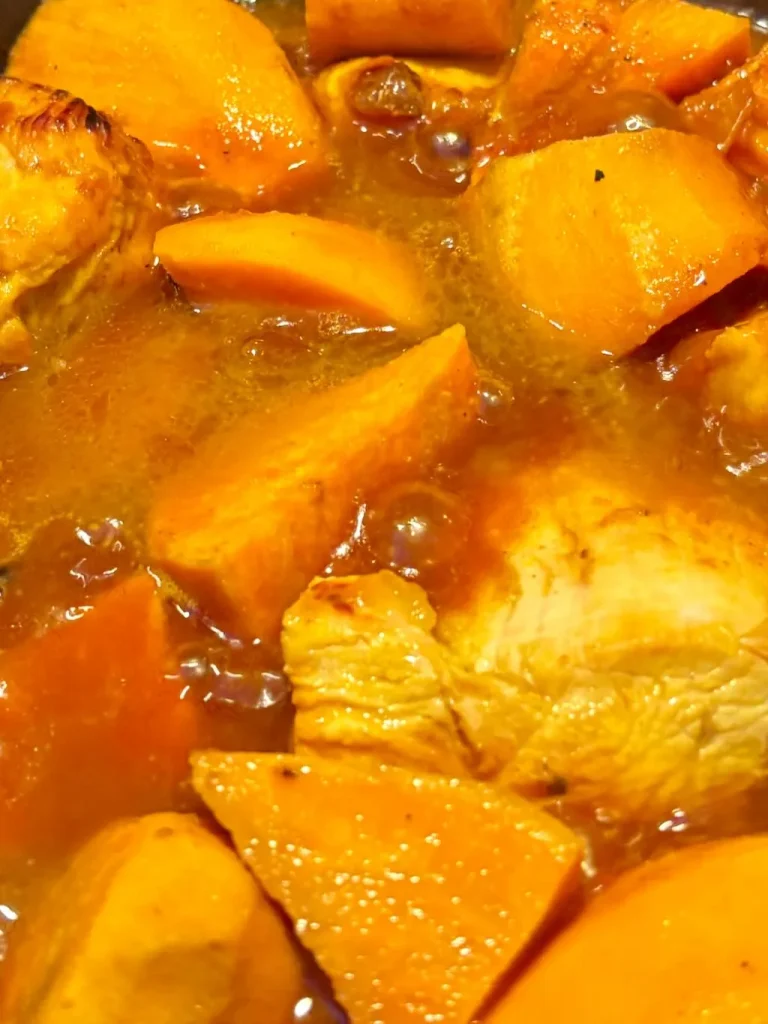
This Honey Mustard Chicken with Sweet Potatoes combines tender chicken, onions, garlic, warm spices, prunes, honey, and mustard in an easy one-pot meal. The chicken is lightly caramelized before gently simmering, while large pieces of sweet potato cook until tender during the final stage. Serve it on its own, with white rice, or mash the chicken and sweet potatoes together for a delicious filling for lavash, pita, or tortillas.
Ingredients
Instructions
-
Add one tablespoon of olive oil to the pot and sauté the onions and garlic over low heat. Add the spices, reserving the salt and half of the turmeric for later. Cover the pot and cook gently until the onions become translucent.
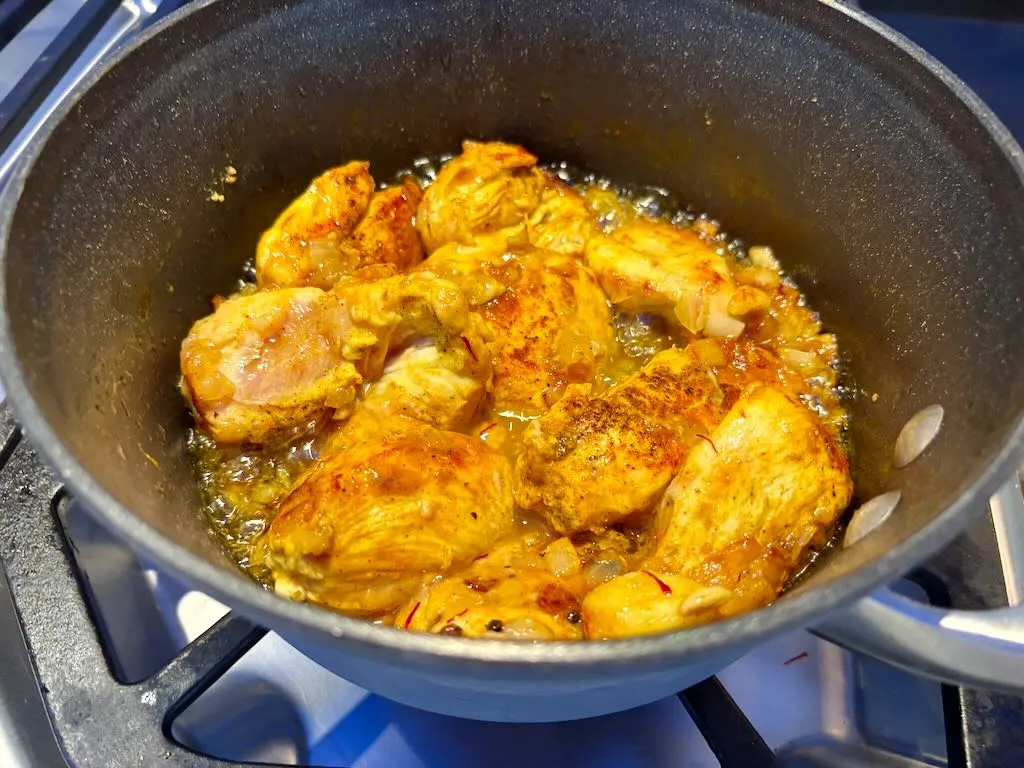
Add the chicken along with the remaining turmeric, honey, mustard, and prunes. Turn the chicken occasionally, allowing it to develop a nice golden color on both sides. Once the chicken has browned, add the salt.
If you used a bouillon cube, add enough hot water to nearly cover the chicken. If you didn't use bouillon, use chicken or vegetable broth instead. I usually add boiling water so the temperature of the pot doesn't drop and interrupt the cooking process. Once the liquid returns to a gentle bubble, reduce the heat, cover the pot, and simmer slowly for about 30 minutes.
-
Peel the sweet potatoes with a vegetable peeler, then cut them into approximately 1 to 1½-inch pieces. After the chicken has simmered for 30 minutes, add the sweet potatoes to the pot. Cover and continue simmering for another 20 minutes, or until the sweet potatoes are tender when pierced with a fork. Gently mix the sweet potatoes with the chicken and sauce, and the dish is ready to serve. Enjoy it on its own or serve with white rice to soak up the flavorful sauce.